Food and wine in Salento: olive oil, Negroamaro and local flavours from Parabita
Palazzetto Vico San Marco23 May 20266 min read
Share
A wine and food holiday italy promises in the south is not a marketing phrase. In Salento - the heel of the boot, the peninsula between the Ionian and Adriatic seas - it is simply the way things are. The olive trees have been here for centuries. The wine is made from grapes that grow in this specific soil and nowhere else. The bread is baked in wood-fired ovens before dawn.
This is a guide for anyone staying in or around Parabita and wanting to eat and drink as the locals do - not on a tour bus schedule, but day by day, at the pace the place actually works.
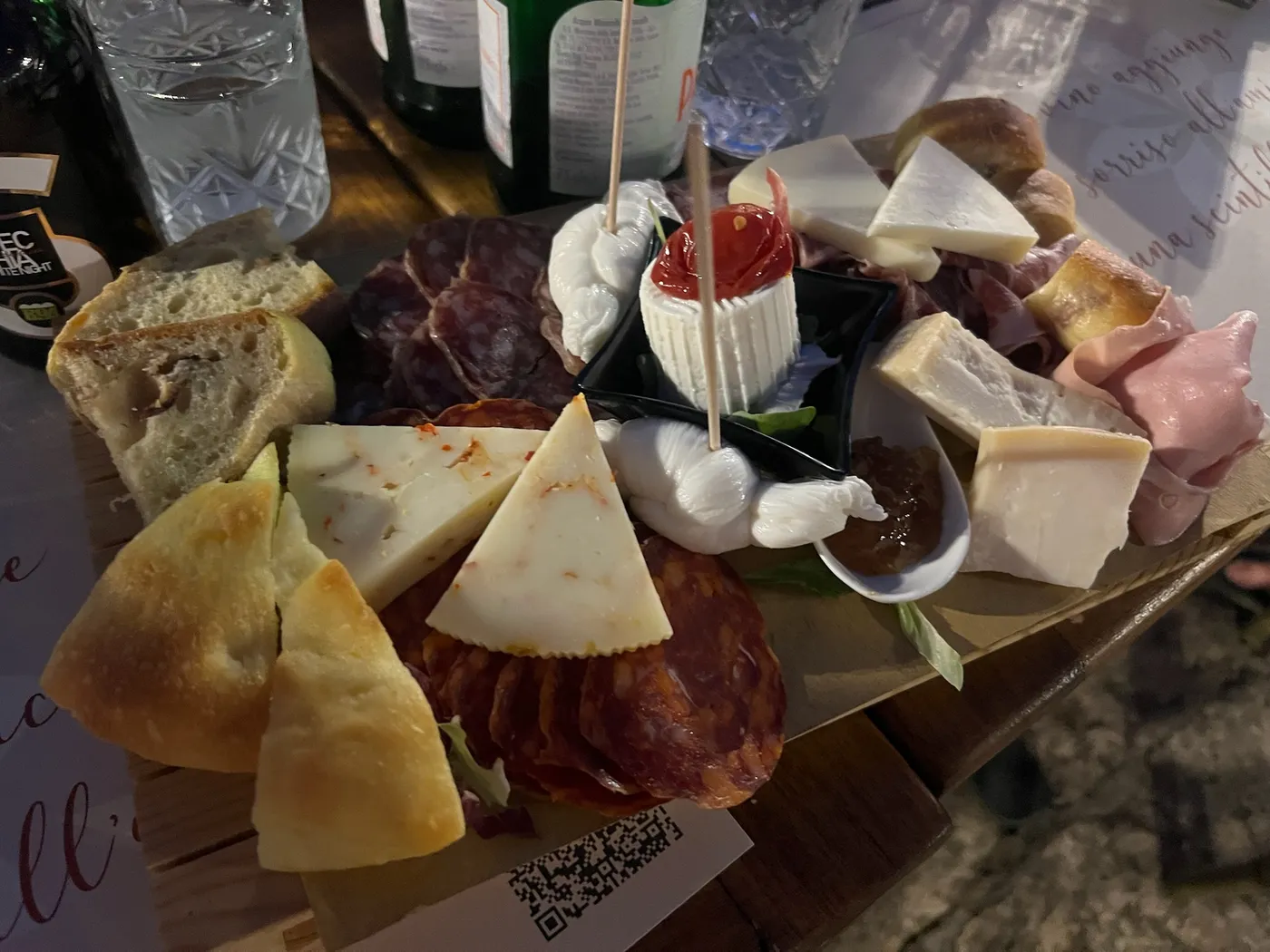
The Salento tagliere: a ritual before every meal, not a course
The wines of Salento
Salento's vineyards produce some of the most distinctive red wines in Italy, all from indigenous grape varieties that have adapted over centuries to the dry summers and limestone soils.
Negroamaro is the foundation. Deep red, earthy, with a slight bitter finish that gives it its name (negro amaro - dark and bitter). It softens beautifully with age. The DOC zones of Salice Salentino and Brindisi produce some of the finest examples, often blended with Malvasia Nera. A glass of Negroamaro from a local producer, drunk outdoors in the warm evening air, is one of those experiences that justifies a culinary holiday puglia on its own.
Primitivo - better known internationally as Zinfandel - is grown further north around Manduria, about an hour from Parabita and well worth a dedicated day trip. It is rich, full-bodied, high in alcohol, with notes of dried fruit and spice. Primitivo vini from certified producers carry the Primitivo di Manduria DOC designation.
Salice Salentino, the wine of the DOC zone just north of Lecce, is perhaps the most versatile of the three: structured enough for meat and aged cheese, approachable enough for an aperitivo.
For something less conventional, several Salento producers have moved toward biodynamic wine methods - minimal intervention, native yeasts, no added sulphites. The results are wines that taste unmistakably of place. Ask in any good enoteca and they will point you toward them.
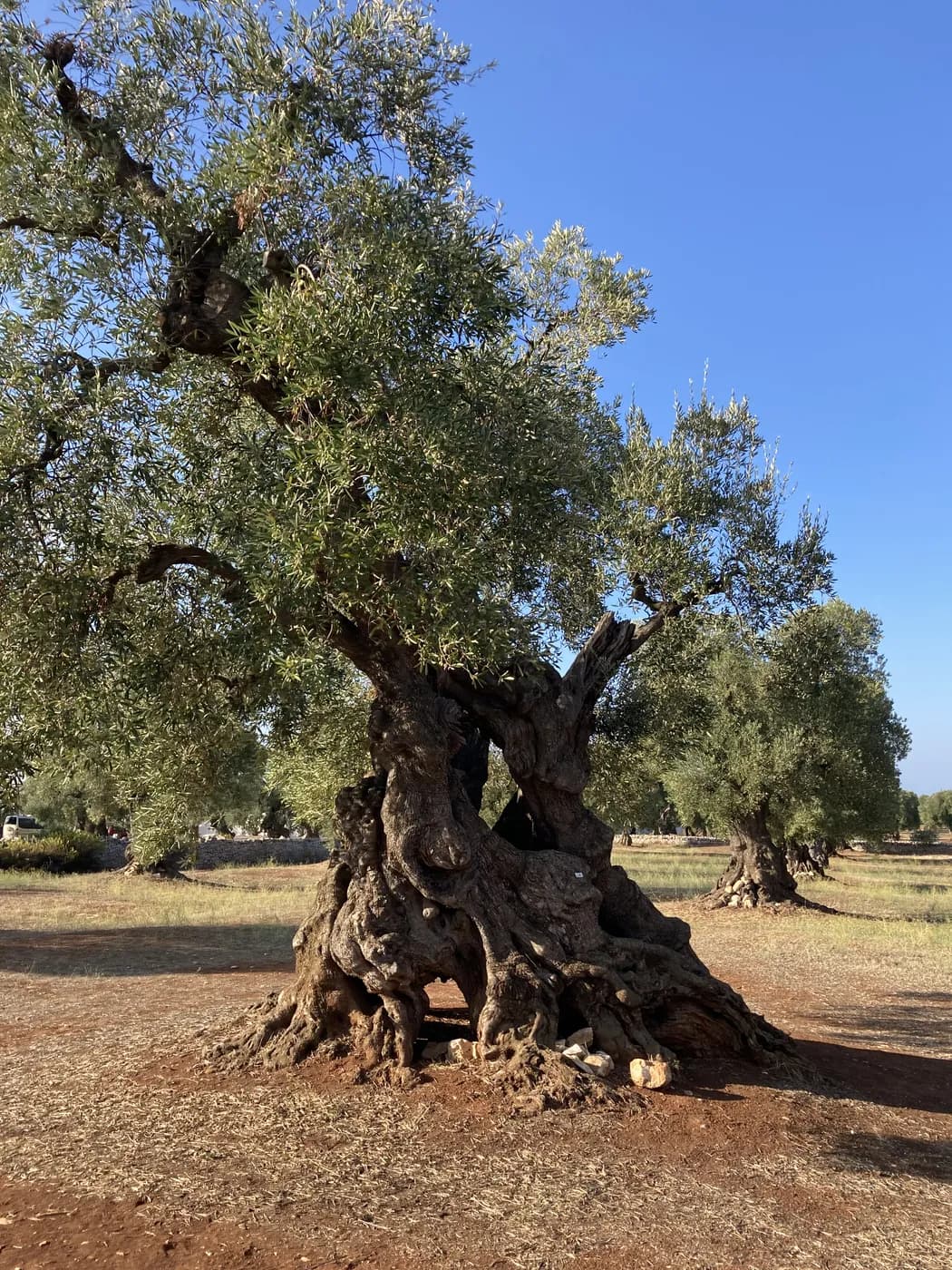
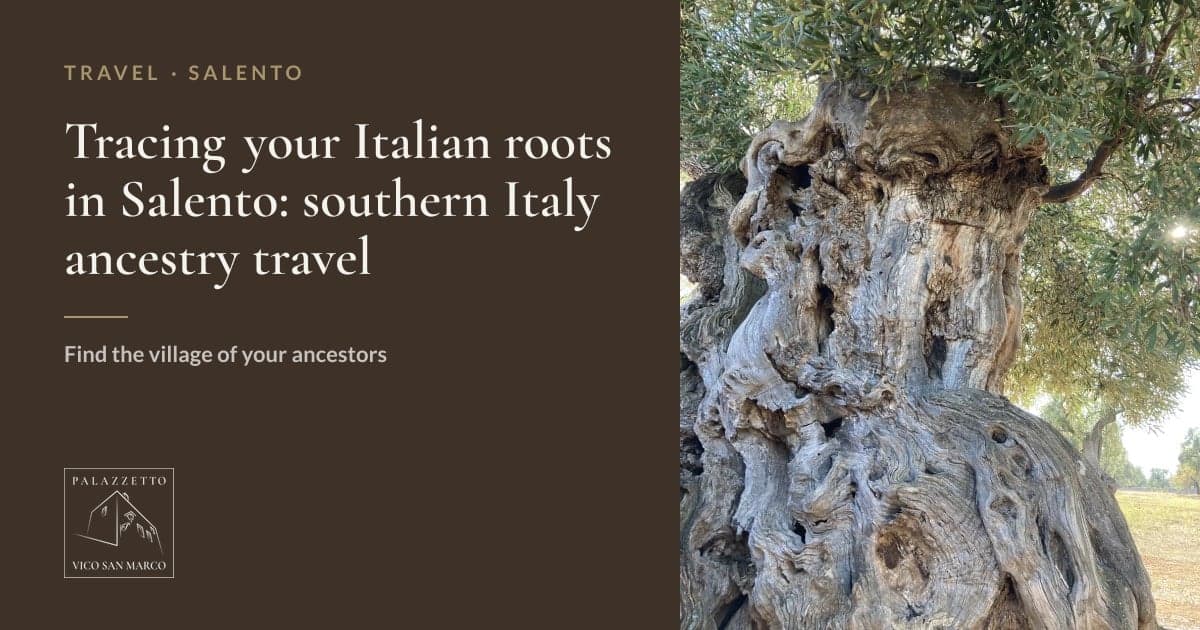
The olive groves of Salento - some trees are over a thousand years old
Olive oil: the other pillar
Puglia produces more olive oil than any other region in Italy - around 40% of national output. Most of it comes from the vast olive groves that cover the landscape between Lecce and Brindisi, visible from every road in the area.
The dominant cultivar in this part of Salento is Ogliarola Salentina, which produces a mild, buttery oil with low acidity - the one you'll find on most restaurant tables. But alongside it, you'll increasingly find Coratina - a variety from northern Puglia that thrives here too. Coratina oil is intense, peppery, high in polyphenols. It is the kind of oil that has a flavour profile of its own, not a neutral backdrop. An olive oil tasting puglia experience built around Coratina is quite different from anything you'll find in supermarkets.
Several agriturismi and small mills in the area around Parabita offer visits during the olive harvest in autumn (October to December), when the air smells of fresh-pressed oil and the mills run continuously. Outside harvest season, tasting sessions with direct purchase are available at many producers year-round.
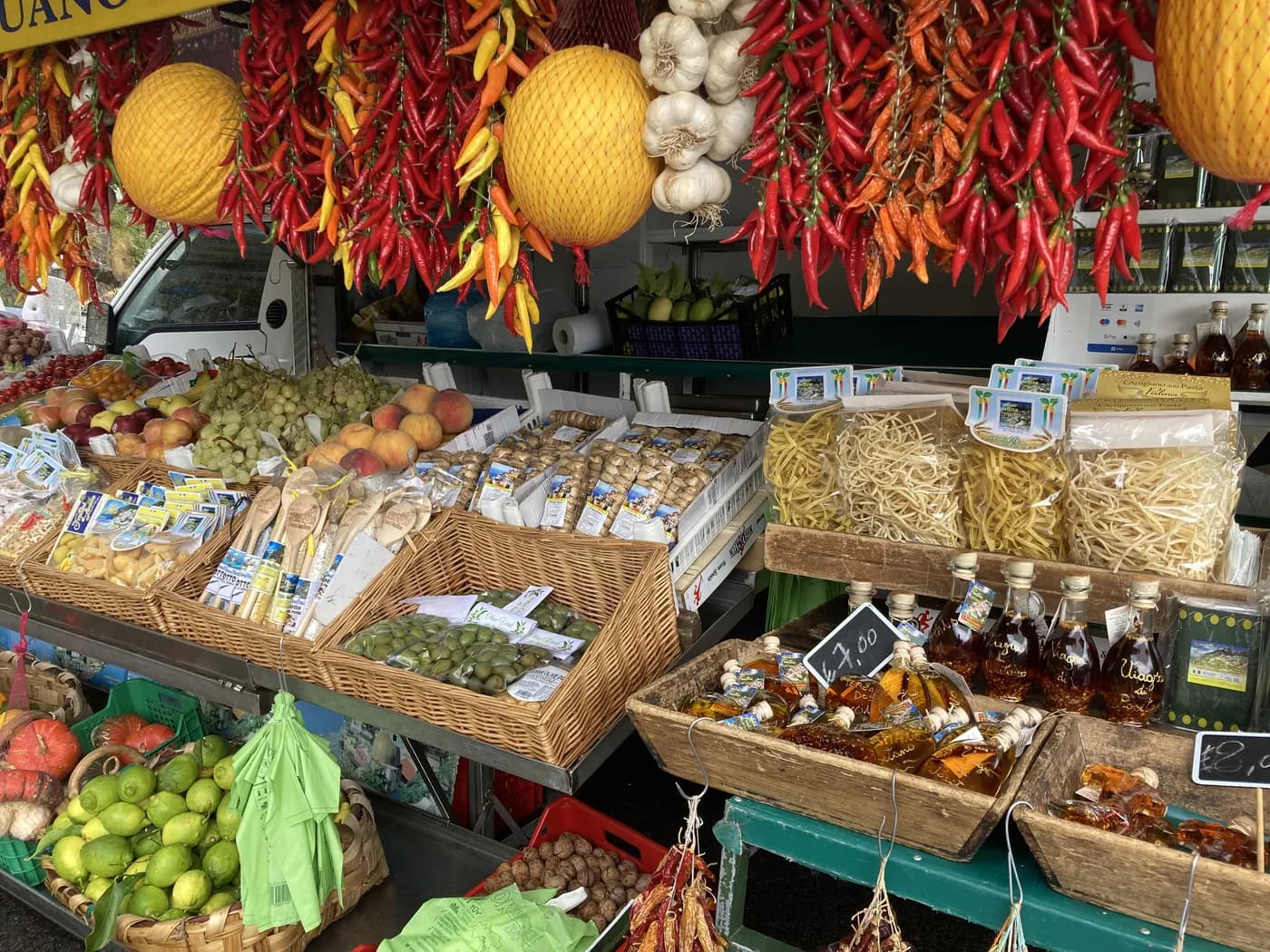
The weekly markets are the real pantry of Salento
What to eat
The food of Salento follows the seasons and the land with an almost obstinate consistency. A few things you should eat at least once:
Orecchiette - the ear-shaped pasta made by hand from semolina and water. Every nonna has a slightly different technique. The classic pairing is with cime di rapa (turnip tops) and a sharp local ricotta, or with a slow-cooked ragù. The orecchiette served at Palazzetto Vico San Marco's recommended restaurants are made fresh the same day.
Puccia - a bread roll baked in a wood-fired oven, stuffed with whatever is available. In summer, that means local tomatoes, tuna, capers. In winter, mozzarella and smoked meats. It is street food in the truest sense - eaten standing, without ceremony.
Tarallini - small ring-shaped crackers made with white wine and fennel seeds, baked until hard. They appear on every tagliere and disappear quickly. You can buy them by the kilo at any bakery.
Fresh fish - Gallipoli is a working fishing port. The daily catch arrives early morning; by noon it is on restaurant tables. On the coast, the rule is simple: if it is not listed as "catch of the day", order something else.
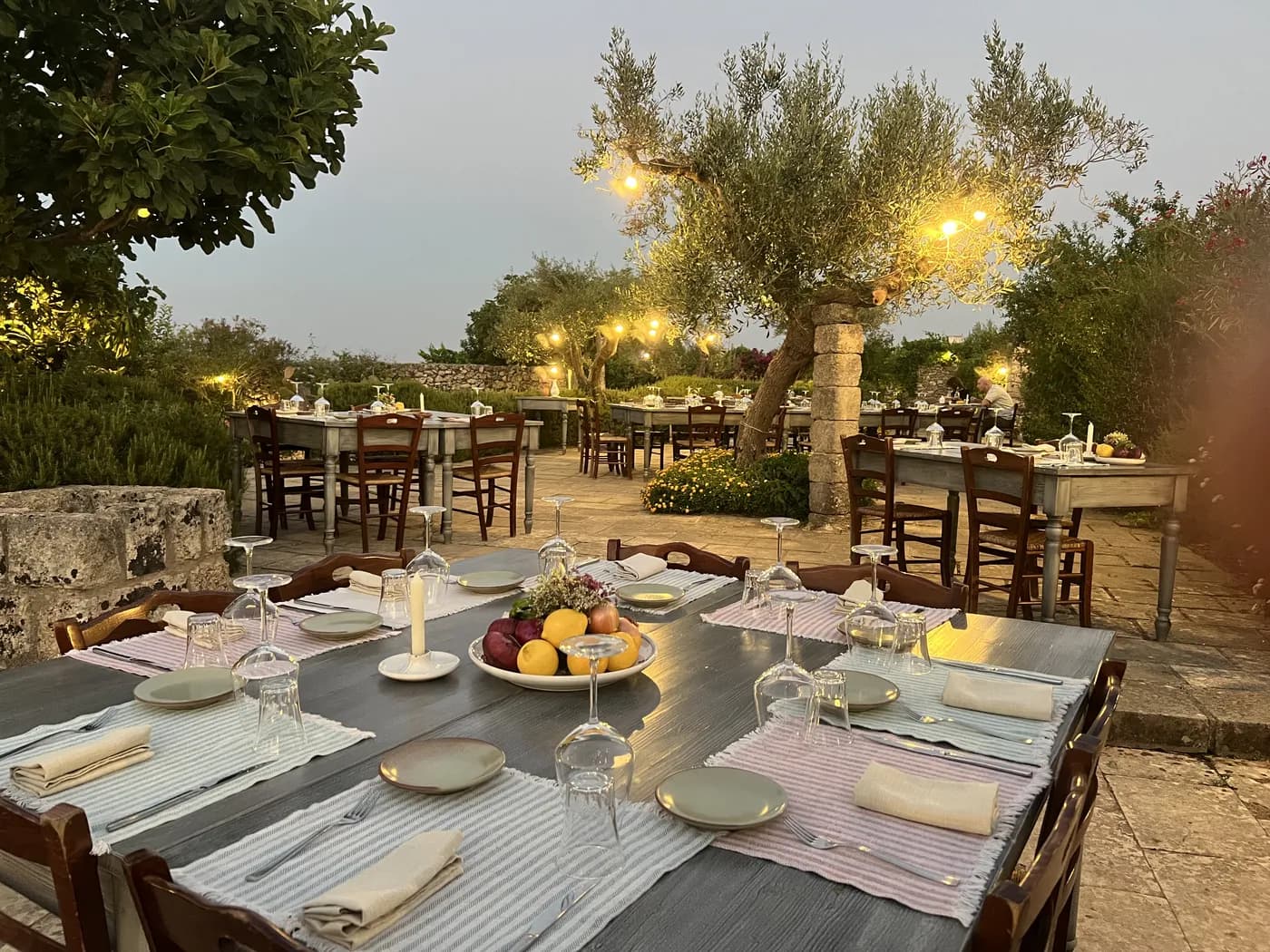
Evening dining in Salento: outdoors, unhurried, under the olive trees
A food and wine tour puglia: how to build one from Parabita
A food and wine tour puglia built from Parabita can be as structured or as spontaneous as you like. A few suggestions:
Morning: the weekly market in Parabita or the permanent covered market in Gallipoli for local produce, cheese and olives.
Midday: a masseria lunch outside town - ask Chiara for introductions to the ones she trusts.
Afternoon: a drive to an olive oil producer for a tasting and direct purchase. The best ones in this area do not need to advertise.
Evening: dinner in Parabita or at a restaurant on the Gallipoli seafront, with a Negroamaro or Salice Salentino from the local list.
The salento wine experience is not a scheduled event. It is the glass on the table at the end of a long, warm day - the combination of the food, the light, the air and the company that makes this part of southern Italy genuinely difficult to leave.
Palazzetto Vico San Marco is in the historic centre of Parabita, 20 minutes from Gallipoli. Chiara, our host, can suggest producers, restaurants and market days based on the season and your interests. Ask when you book.
Salento at the table, steps from your door
Two apartments in Parabita's historic centre, surrounded by olive mills, wineries and inland trattorias. Chiara will tell you where to go, season by season.