Travel & Territory
Parabita: the hidden gem in Salento nobody put on the map
There is a kind of place in southern Italy that never makes the travel magazine covers, has no queues outside the bar in the morning, and has not yet sacrificed the quality that famous places trade away for mass tourism: the sense of being somewhere real, lived in by real people, with a history that was not staged for visitors but is simply there - carved into the stone of doorways and painted on the walls of crypts.
Parabita is one of those places. Eight thousand people, province of Lecce, 83 metres above sea level on the northern edge of the Serre Salentine hills. Twenty minutes by car from Gallipoli. Forty from Lecce.
A history that begins before history
The Grotta delle Veneri - a Palaeolithic site within the municipal territory - yielded two small bone statuettes of female figures, the so-called Palaeolithic Venuses, which helped confirm the presence of Cro-Magnon man in the Mediterranean basin. The originals are held at the National Archaeological Museum in Taranto; Parabita's Museo della Preistoria reconstructs the context with documentary material open to the public.
The medieval village was founded in the Norman period - probably around the 12th century - with a defensive wall pierced by four gates: the Porta di Lecce to the north, the Porta di Gallipoli to the west, the Porta Falsa to the east, and a fourth to the south whose name has been lost entirely.
Over the following centuries Parabita passed through the hands of several great feudal families - the Sanseverino, the Orsini Del Balzo, the Ferrari. The Castriota family commissioned the reconstruction of the castle from the architect Evangelista Menga of Copertino, the same hand that worked on the castles of Copertino and Lecce.
What to see in the historic centre
Angevin Castle
Dominates the main piazza. Medieval origins, present appearance dating from 1911. Private property, not open to visits internally.
Chiesa Madre - San Giovanni Battista
First nucleus from the 13th century. The north portal in Lecce stone was commissioned from the Lecce sculptor Gabriele Riccardi by the Castriota family.
Byzantine crypts
Crypt of Santa Marina and the rock-cut crypt of Cirlicì (12th century). Frescoed walls among the most precious historic material in the village.
Basilica della Coltura
Neo-Gothic building in Lecce stone, 20th century. Façade with rose window and richly decorated portal.
Noble palaces
Palazzo Castriota, Palazzo Lopez Y Royo, Palazzo Ferrari, Palazzo Vinci: loggias, sculpted portals, baroque wrought iron.
Wine Museum
An 1891 palmento (wine press) in the historic centre. Documents the winemaking tradition of the Salento.
Pinacoteca Giannelli
In the rooms of Palazzo Ferrari: 43 paintings and 10 sculptures from the 19th-century Neapolitan school.
Why the hinterland is worth more than the coast
Anyone who has rented in Gallipoli in August knows what it means: prices tripled, roads gridlocked, beaches at capacity. Parabita, twenty minutes from the same Gallipoli, has a completely different relationship with summer. The morning is quiet, the afternoon you move toward the coast, the evening you return to a historic centre that still has its human scale.
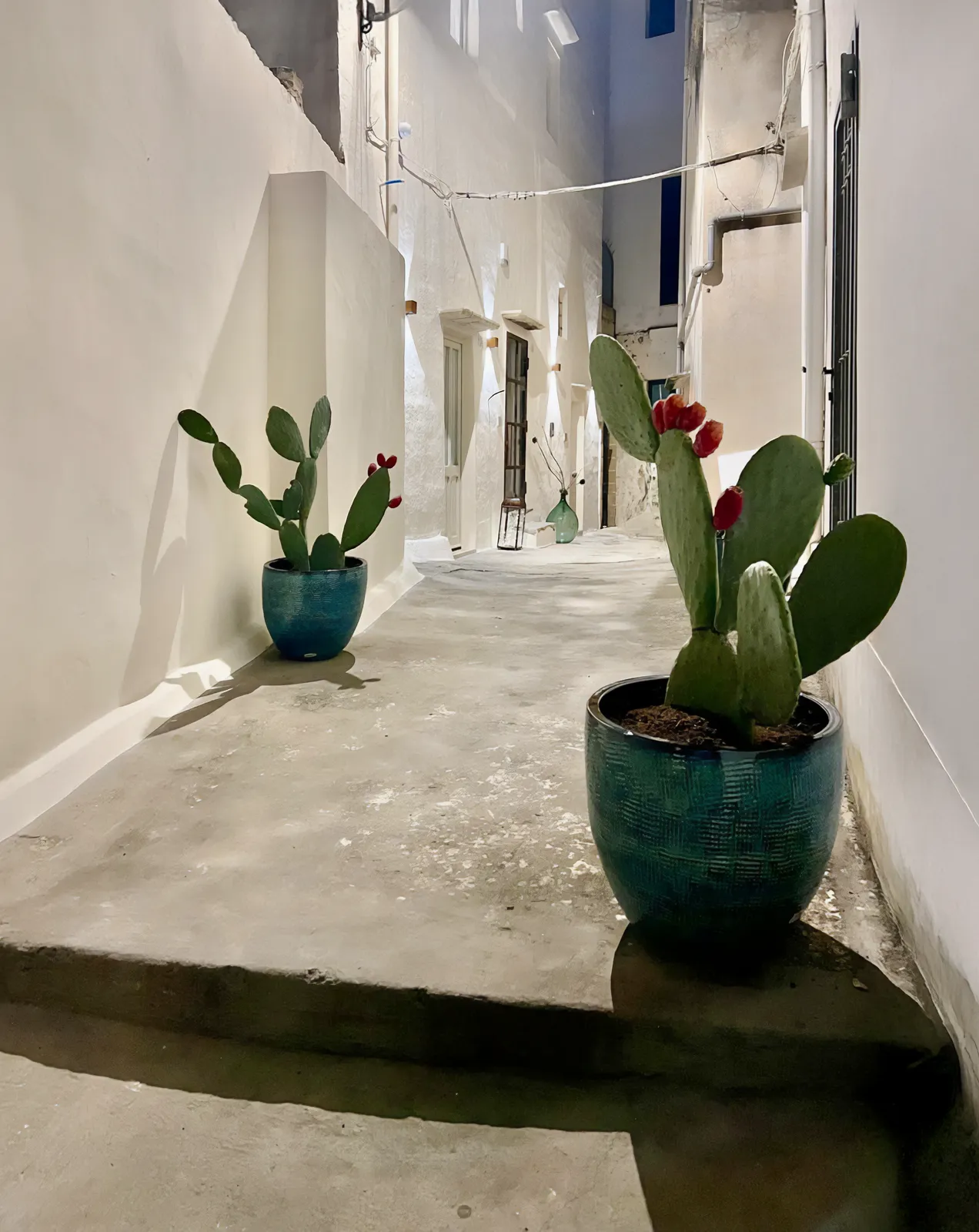
The most authentic Puglia is not on the coast. It is in the hinterland villages where the lanes still have the proportions of human life and where the stone is not a tourist attraction but simply the material everything is built from.
Craft, wine and food: what to bring home
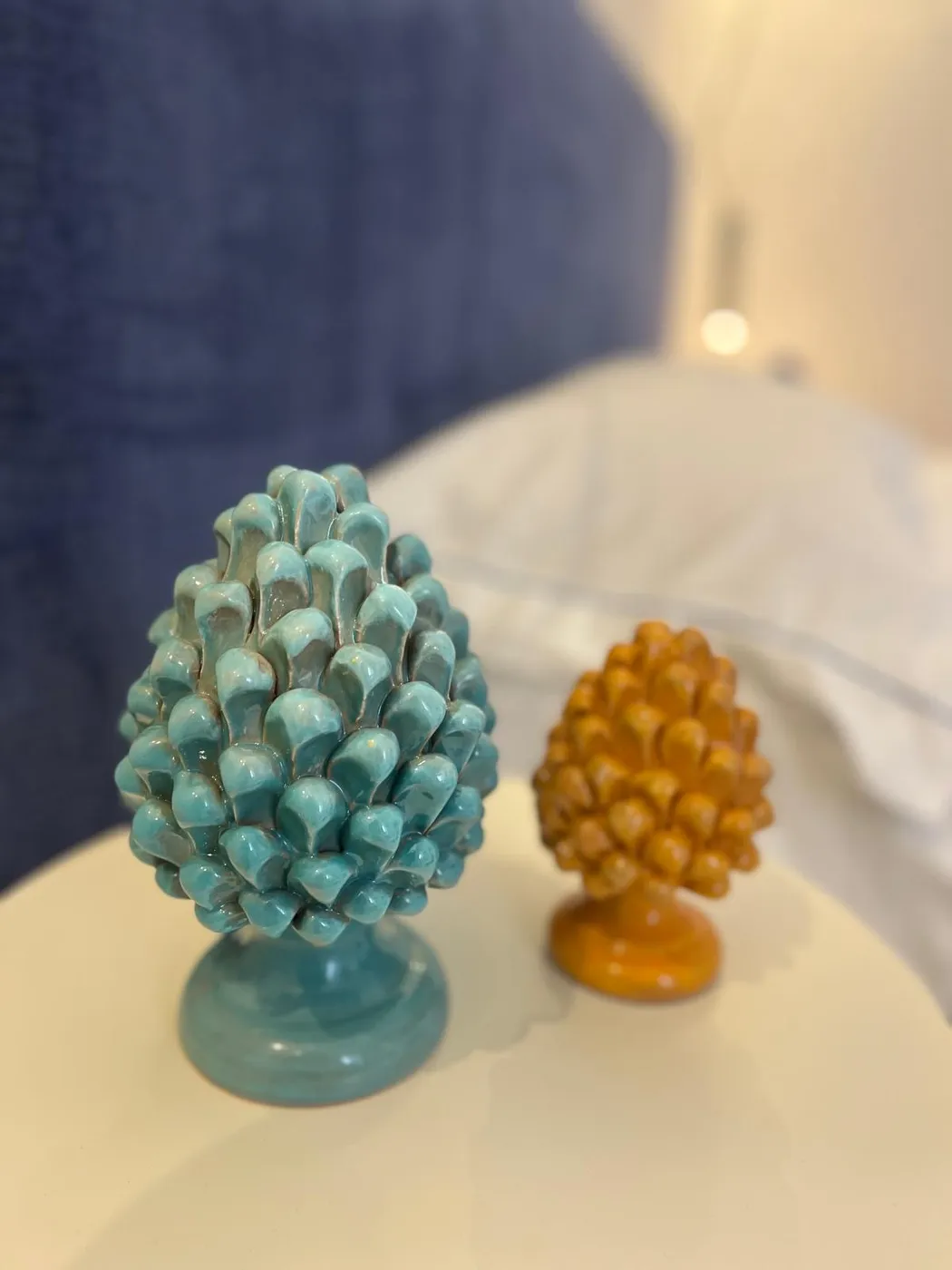
Parabita's craft tradition includes work in Lecce stone and carparo, restoration, wrought iron, wood, glass and weaving. For anyone looking for something to bring home with a real story behind it, the historic centre has options worth seeking out.
Food: dishes to look for
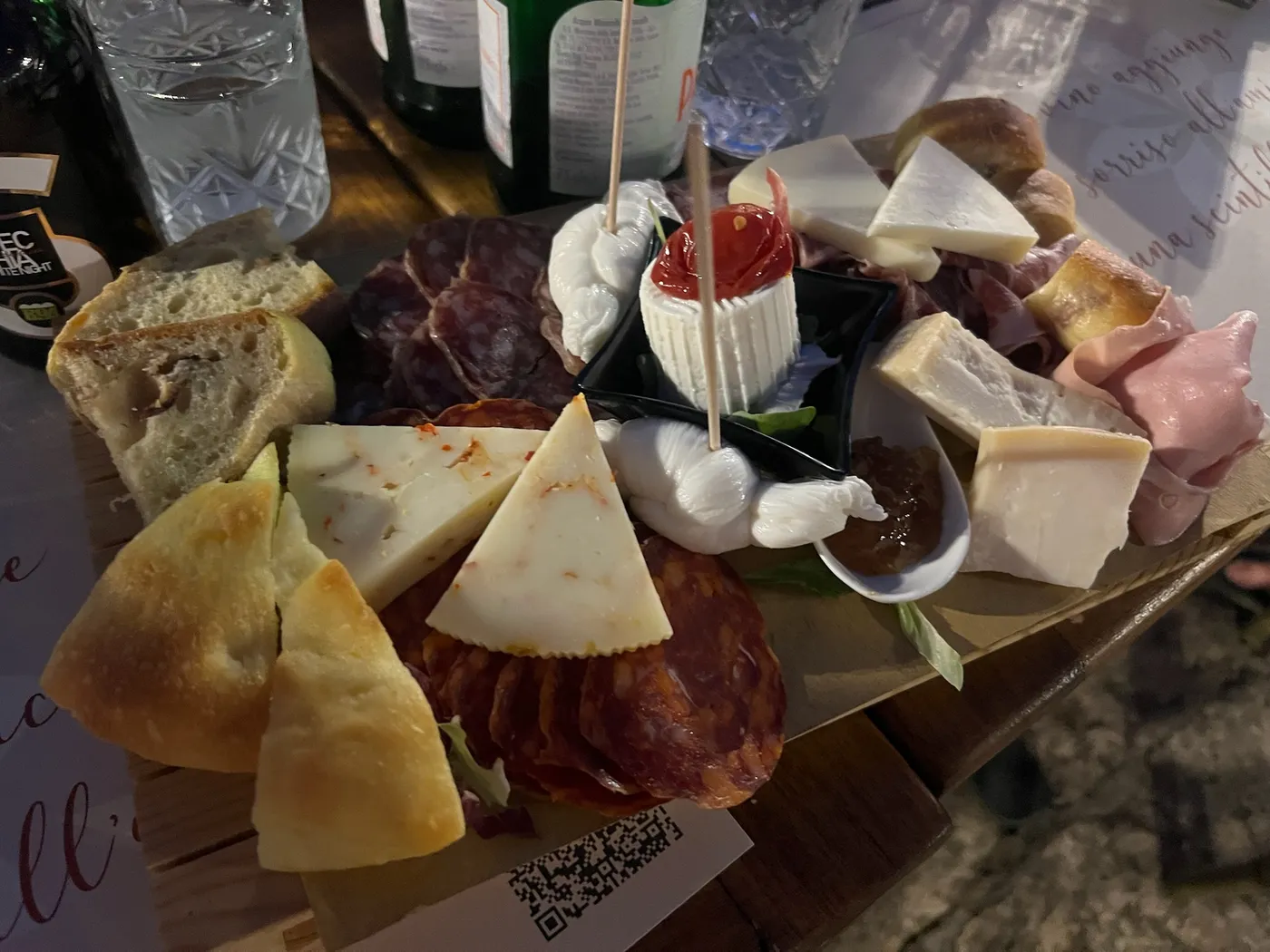
The cooking of Parabita is rooted in the Salento peasant tradition: ciceri e tria (fried pasta with chickpeas), frise dressed with tomato, oregano and extra-virgin olive oil, fried pittule, pasticciotto leccese. The quality in the trattorias of the historic centre tends to be more honest and better value than the restaurants on the coast in high season.
Sleep in the heart of Parabita
Palazzetto Vico San Marco is an 18th-century palazzo in the historic centre, a few steps from the Chiesa Madre and the noble palaces. Two independent apartments, April - October.