Art & Culture · October 2026
Votiva: in Parabita, old street shrines become contemporary art
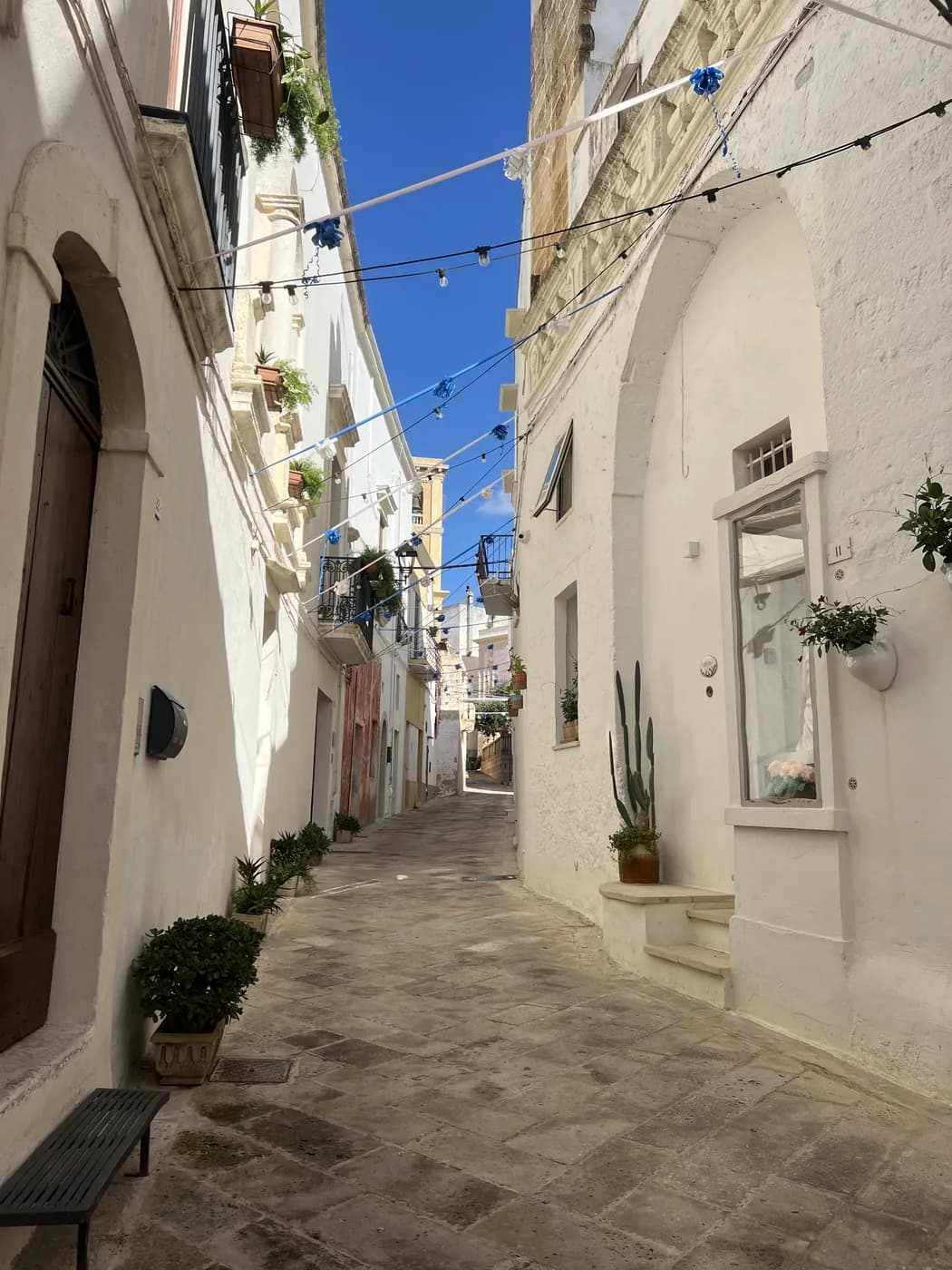
In the old towns of Salento, votive shrines are everywhere: small niches carved into house walls where, for centuries, people placed a papier-mâché saint, a terracotta Madonna, a candle. Over time many of them were left empty. In Parabita, someone thought those empty spaces could speak again, in a different language.
That is how Votiva was born: an open-air trail where the village's devotional niches host works by contemporary artists, many of them internationally renowned. The project was recently featured by Vanity Fair Italia, which describes it as one of the drivers of the town's cultural revival.
From an empty niche to a project
It all started with an almost private gesture. Apulian artist and designer Giovanni Lamorgese opened his studio in Parabita and found, on its outer wall, a shrine worn away by time. He filled it with one of his own works from 2015, L'Addolorata: a white majolica Madonna, broken into three pieces and put back together. The Virgin's sorrow becomes everyone's sorrow.
The town council, led by mayor Stefano Prete, picked up the idea and scaled it: let the traditional shrines talk to today's art. Thanks to curators Flaminia Bonino and Laura Perrone, artists such as Michelangelo Pistoletto, Mimmo Paladino, Adrian Paci and Claire Fontaine came to Parabita. Votiva became the first chapter of Parabita per il contemporaneo, a cultural programme that is still going on.
The sacred is neither erased nor imitated: it is brought into conversation. That may be Votiva's secret: a village that opens up to the world without ceasing to be itself.
Works not to miss
The trail winds through the lanes of the old town. A few stops, roughly in the order you meet them entering from Via Coltura:
Michelangelo Pistoletto - Il canto della pace preventiva
Via Lopez y Royo. A sphere covered in newspapers in front of a mirror: the world and its bad news, and us invited to reflect ourselves in it. A QR code plays a nursery rhyme read by the artist.
Francesco Arena - Dio Cubo
One of the first works you meet as you head into the lanes.
Felice Levini - Il piede del Santo
A reflection on vulnerability, a few steps further on.
Liliana Moro - Polaris
A boat and a lighthouse that blinks on and off: an image of finding your bearings, at a time when we need it.
Mimmo Paladino - Untitled
Blue and gold marble tesserae form a figure holding a bowl. Gift and mystery, by one of the leading names of the Italian Transavanguardia.
Adrian Paci - Compito #20
On Via Vittorio Veneto.
Ludovica Carbotta - S/T (segnale non visivo)
Via Montella. Body fragments emerge from a screen, like the protections fitted to statues during wartime. A big toe points to the sky.
Claire Fontaine - Wishing Painting
Just outside the old town. Coins on a blue canvas, like those tossed into fountains: a secular ex-voto that shines like a starry sky.
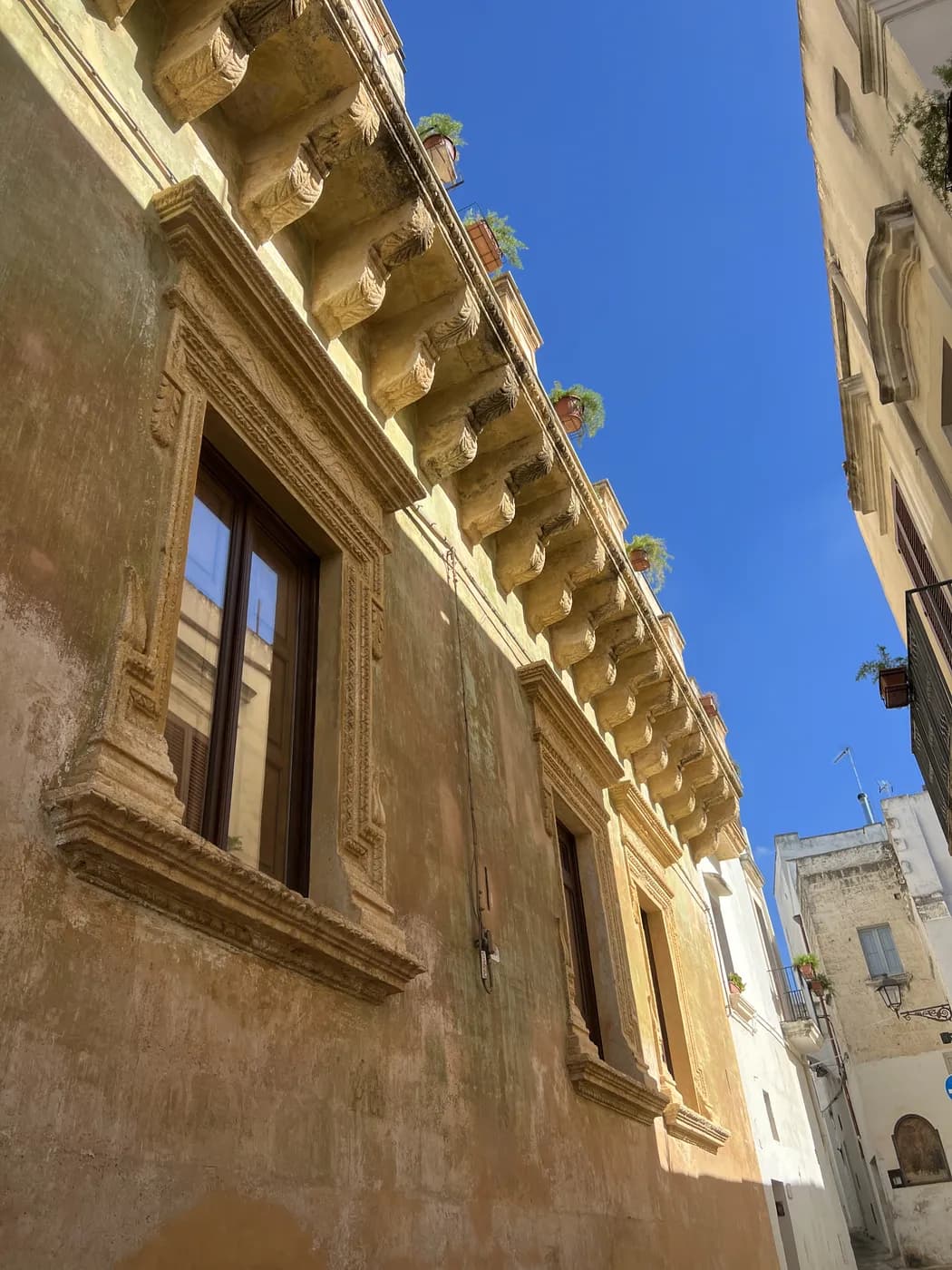
Along the way, look up at Palazzo Arditi, which everyone in Parabita calls the Devil's Palace: legend says the balcony kept collapsing during construction, so the builders had a demonic mask carved under the corner corbel to keep the devil away. It is still there.
How to visit
On foot the trail takes about forty minutes, but the best way to experience it is the free guided tour run by the cultural association Progetto Parabita: about an hour and a half, meeting in Via Coltura at the entrance to the old town. The guides explain the artworks, but also the original shrines, the palaces and the town's stories.
A tasty break between works
Votiva is also an excuse to taste the town. Before setting off, grab a rustico (puff pastry filled with béchamel and tomato) or a pasticciotto at one of the cafés by the old town entrance. Along the way, opposite Ludovica Carbotta's work, there is an old wood-fired bakery that has been baking for four generations: barley friselle, durum wheat loaves, taralli and little pastries filled with grape must jam to take home. And at the end, the little square beneath the Angevin Castle, with its outdoor tables, is the place for an aperitivo or dinner.
Read the article on Vanity Fair
Stay steps from the trail
Palazzetto Vico San Marco sits in the heart of Parabita's old town: step outside and you are already on the Votiva trail. If you want to discover the village slowly, and come back in the evening when the lanes empty out, it is the ideal base. To learn more about the town, read Parabita: the Salento village you didn't expect.
The old town, right outside your door
Two apartments in an 18th-century palazzo a short walk from the Votiva works, the square and the Angevin Castle.